Composition, production process, and purchasing suggestions of fruit foam net machine
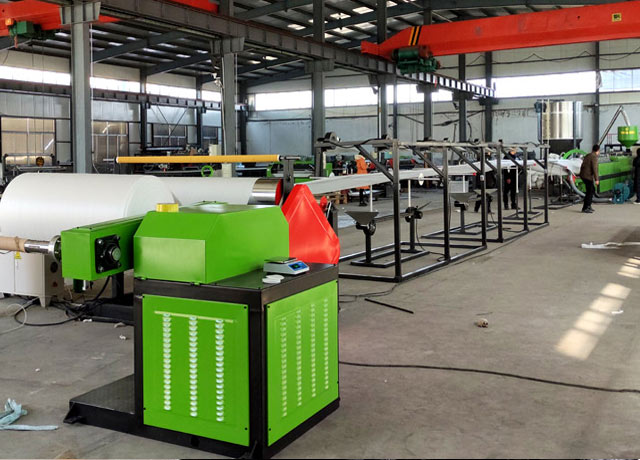
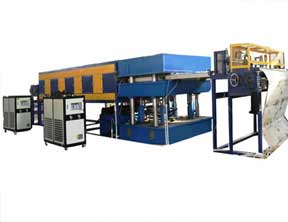
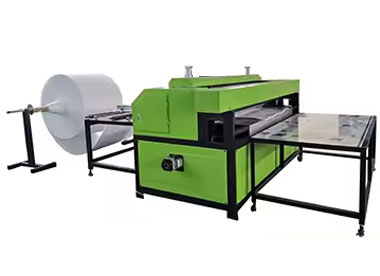
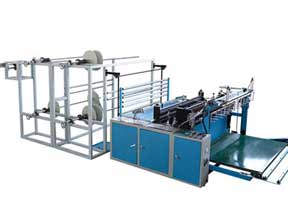
A foam net machine, commonly known as a "plastic foam net machine" or "fruit foam net machine" or "EPE foam net machine", is a device that mixes plastic particles (usually LDPE low-density polyethylene) with a foaming agent, extrudes them through a special rotating die, and instantly foams them into a continuous cylindrical net. This type of net cover is also known as a "bubble net", "fruit net cover", or "packaging net" due to its appearance resembling a fishing net.
Core output: A flexible tubular foam net sleeve with cushioning, shock resistance, and breathability properties.
Main types of foam net machine:
According to the final product form and application, it can be mainly divided into two categories:
Ordinary epe foam net machine (flat net/sheet net): The produced net is flattened in a natural state, more like an elastic foam net. Mainly used for wrapping flat items, as a spacer between layers, or for use after cutting.
Vertical epe foam net machine (three-dimensional circular net): The net produced maintains a cylindrical shape under the action of traction and internal airflow. This is the most common and typical netting machine, which can be directly fitted onto cylindrical objects such as fruits, bottles, and lamps. It has a high degree of automation and is often used in conjunction with automatic bagging machines.
The main components of the foam net machine are:
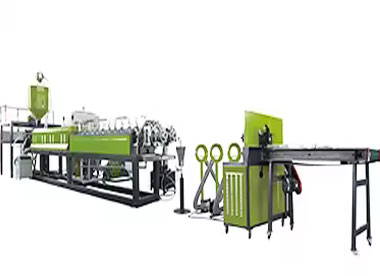
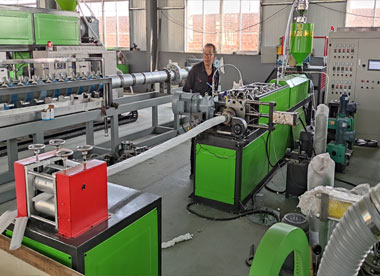
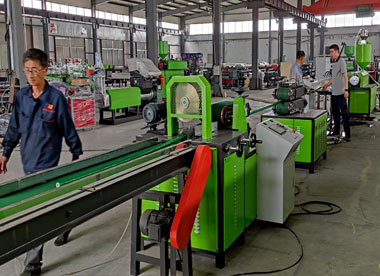
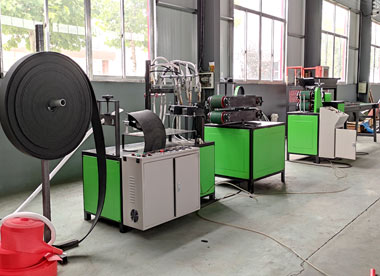
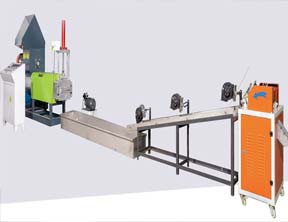
A standard net production line mainly includes:
Automatic feeding system: sucks LDPE particles into the main machine hopper.
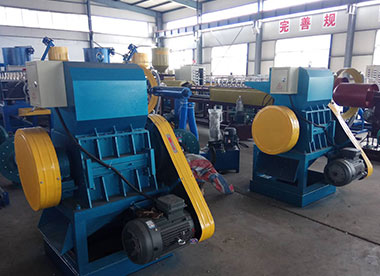
Extrusion host: Single screw extruder, responsible for heating, melting, and plasticizing raw materials.
Foaming agent injection system: Precisely inject butane or environmentally friendly CO ₂ as foaming agent.
Rotating die system (core components):
This is the key to forming the net cover. There is a specially designed flow channel inside the mold head, and an external molding sleeve that can rotate at high speed.
When the molten foam material is extruded from the annular gap of the mold head, it is "thrown" into a spiral shape due to the rotation of the forming sleeve, and at the moment of foaming expansion, it adheres to each other to form a net structure.
The combination of rotation speed and extrusion speed determines the size and shape of the net.
Cooling and shaping system: The newly formed foam net has a high temperature and needs to be cooled by air or water mist to stabilize its shape.
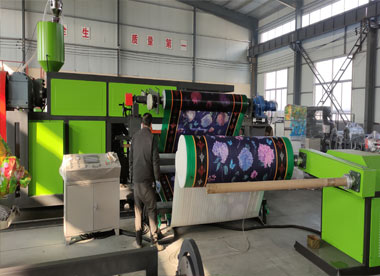
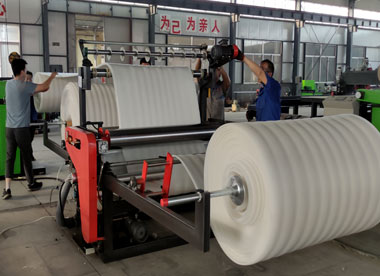
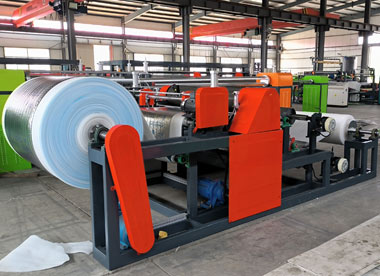
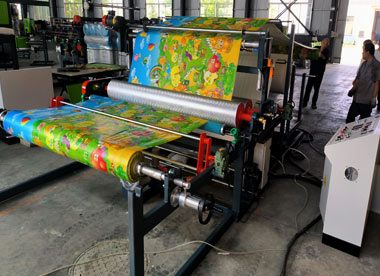
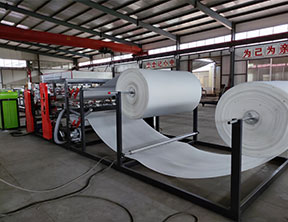
Traction and winding system: Pull out continuous net sleeves and harvest large plates through a winding machine or directly feed them into a bagging machine.
Vertical machines usually have air blowing devices that blow air into the net sleeve to maintain its cylindrical shape and assist in traction.
Electrical control system: PLC control, regulating temperature, speed, traction speed, etc.
Working process of the foam net machine:
Plasticization and foaming: LDPE particles are melted in the extruder and evenly mixed with the injected foaming agent.
Rotary extrusion: The foamable melt is pressed into a high-speed rotating die and extruded in a spiral shape from the annular gap.
Foaming molding: The pressure of the extruded fuse is released, and the foaming agent vaporizes, causing it to rapidly expand. Adjacent thermal fuses come into contact and bond during the expansion process, forming a three-dimensional net structure.
Cooling and shaping: The net sleeve is cooled and the structure is solidified.
Traction winding: pulled out by traction, kept in a cylindrical or flattened state, and finally wound up or directly used for bagging packaging.
Characteristics and advantages of foam net cover products
Excellent cushioning: The foam structure can effectively absorb impact and vibration.
Lightweight and low-cost: With minimal material usage and low density, it is very economical.
Good breathability: The net structure facilitates air circulation and is commonly used in fruit packaging to prevent stuffiness.
Soft and elastic: It can tightly wrap items and is not easy to loosen.
Easy to operate: Automated bagging has extremely high efficiency.
Main application areas of foam net cover
Fruit packaging (largest market): Packaging for individual fruits such as apples, pears, peaches, mangoes, etc., which is anti-collision, shock-absorbing, breathable, and aesthetically pleasing.
Wine and beverage packaging: jacket of grape wine bottle, white wine bottle and high-grade condiment bottle.
Glass products and lighting fixtures: shockproof packaging for glass cups, light bulbs, light tubes, and lampshades.
Crafts and ceramics: protection of fragile items such as porcelain vases, statues, and photo frames.
Industrial parts: spacing and protection of precision instrument components and hardware.
Trends and Key Points for Choosing Netgear Technology
Trend:
Environmental Protection: The use of CO ₂ foaming technology to replace traditional butane foaming is safer and more environmentally friendly, which is currently the mainstream and mandatory requirement.
Efficient automation: Integrated with fully automated fruit sorting, bagging, and boxing production lines to form an unmanned packaging assembly line.
Adjustable net size: Through advanced control systems, a machine can produce products of various net sizes and thicknesses.
Suggestions for choosing a foam net machine:
Clear requirements: Determine the main packaging objects (size, shape) and required production volume.
Core components:
The quality and accuracy of the rotating die determine the uniformity and stability of the net sleeve.
Extruder stability.
Foaming technology: Priority should be given to CO ₂ foaming machines, which comply with environmental and safety regulations.
Automation level: Whether automatic winding, metering, cutting, or connection with bagging machines are required.
Energy consumption and after-sales service: Investigate the energy efficiency ratio of equipment and the after-sales service capability of suppliers.
summary
epe foam net machine is a specialized equipment for producing lightweight, low-cost cushioning packaging nets. It uses a unique rotary foaming process to produce highly cost-effective net packaging materials, occupying an irreplaceable position in personalized packaging of fresh fruits, alcoholic beverages, and fragile items. Its investment threshold is relatively low and the operation is simple, making it a common choice for entry-level and mass production in the packaging industry.
Why Choose Us
China manufacturer of EPE foam machinery since 2003.EPE foam machine not only have covered all over China, but also have exported to more than 70 countries
Would you like to take a closer look at our offer?

You May Like:
We are making Composition, production process, and purchasing suggestions of fruit foam net machine factory, manufacturer & supplier & exporter.We specialize in making EPE foam machine for over 20+ years